The Ultimate Built-in Oven Guide: How to Choose and Install the Perfect Oven
G3iujg W7A built-in oven fits into kitchen cabinetry, with the hob installed separately. Choosing the right one means balancing cooking capacity, useful features and the installation requirements of your kitchen.
Start with the type of oven you need, then check the exact model’s specifications before ordering.
Single, double or compact?
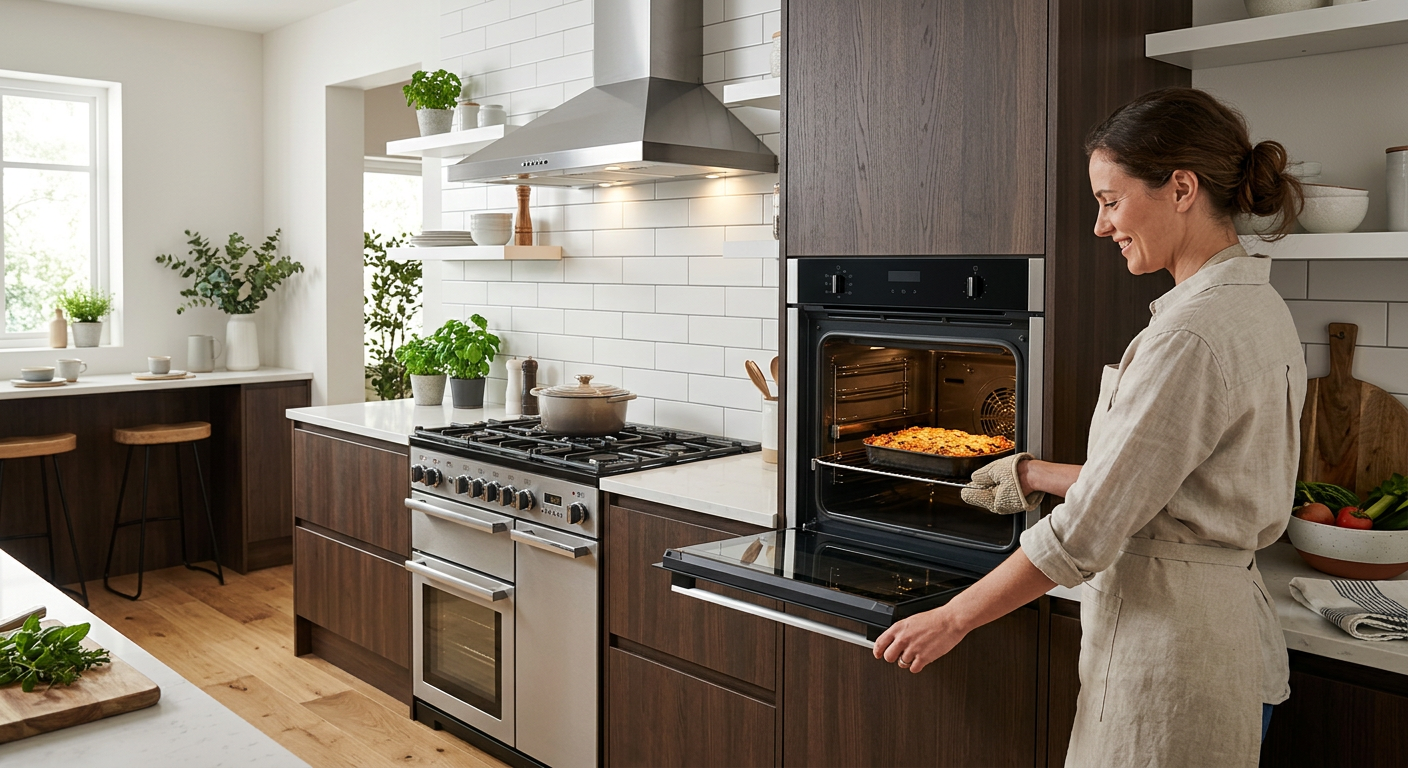
A single oven has one cooking cavity. It can suit everyday meals, baking and roasting, provided its usable capacity and shelf positions meet your needs. Models may be designed for installation beneath a worktop or in a tall cabinet, so check the permitted installation positions.
A double oven has two cavities, giving you more flexibility to cook at different temperatures. Check what each cavity offers: the smaller one may have fewer cooking functions, and its capacity may not suit your largest dishes.
Built-under double ovens and tall-housing double ovens are different formats. Don’t assume one can replace the other without checking the cabinet opening and installation instructions.
Compact ovens have a shorter format and may offer conventional cooking, microwave functions, steam or a combination. Not every compact oven includes all these functions. Check its capacity and whether your usual cookware will fit.
Measure the cabinet opening, not just the old oven
An oven’s advertised size does not give you every measurement needed for installation. Its external dimensions and the required cabinet opening are not necessarily the same.
Before choosing a replacement, check:
- The cabinet opening’s width, height and depth.
- The manufacturer’s required ventilation openings and clearances.
- Whether the cabinet and supporting shelf are suitable for the appliance.
- Space for the door to open fully without hitting nearby handles or fittings.
- The position of connections and any space they require behind the oven.
- The delivery route through your home.
Use the installation drawing for the exact model. Don’t assume a new oven will fit simply because it has the same nominal size as your old one.
Choose capacity around your cooking
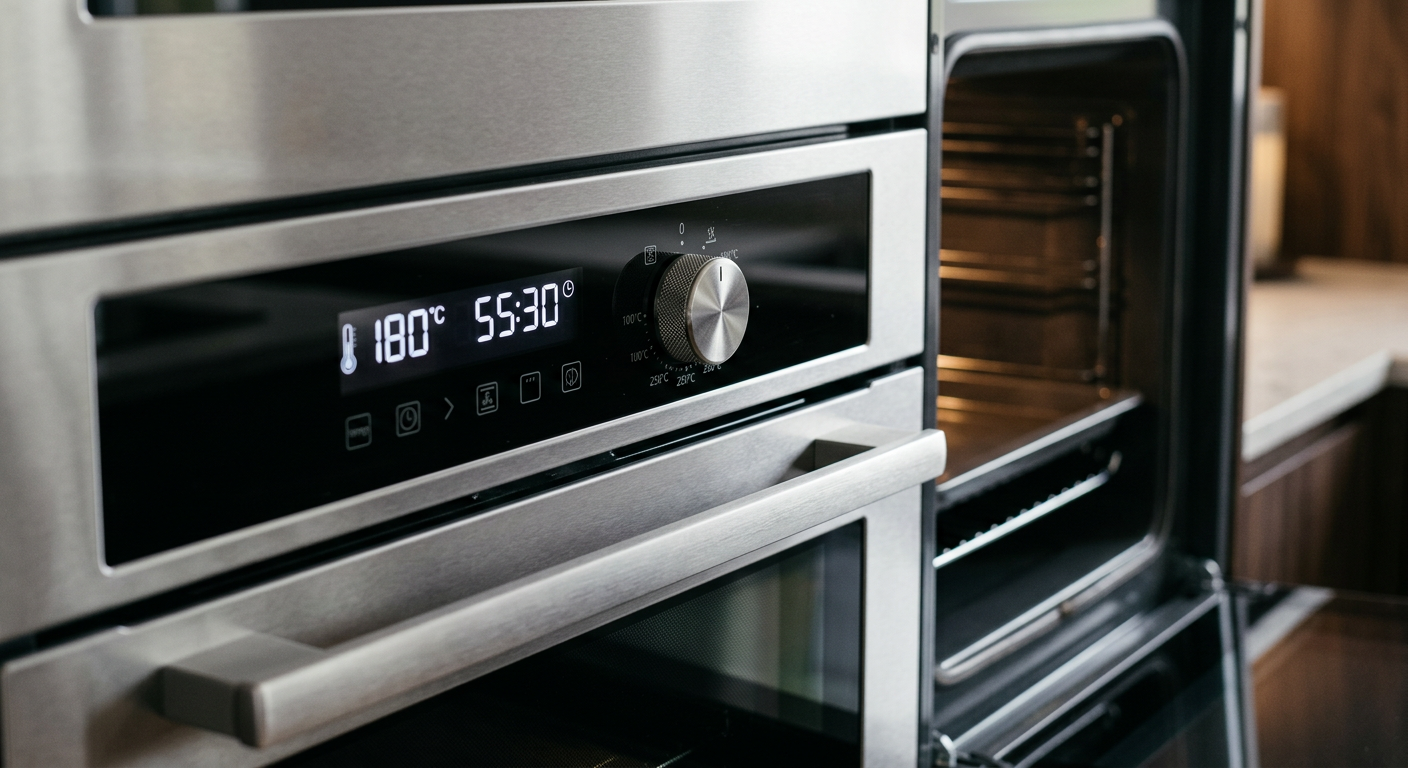
Capacity in litres is useful for comparisons, but it doesn’t tell the whole story. Shelf spacing, cavity shape and the size of the supplied trays also affect what you can cook.
Check whether your roasting tin, baking sheets and casserole dishes will fit. If you regularly prepare several dishes together, compare the usable shelf positions and the manufacturer’s guidance for multi-level cooking.
For a double oven, consider each cavity separately rather than relying on the combined capacity.
Compare cooking functions
Conventional cooking uses upper and lower heat, while fan-assisted and fan-oven settings circulate heated air. Terminology varies between manufacturers, so read the model’s function descriptions rather than relying on the programme name alone.
A separate grill, clear timer and easy-to-use controls may be more valuable for everyday cooking than a long list of specialist programmes.
Steam-assisted ovens add moisture during selected cooking modes. Full steam cooking is a different capability, so check exactly what the appliance offers. Water supply, filling and descaling requirements also vary.
Combination microwave ovens can bring several cooking methods into one appliance. Check which modes can be used together and what cookware is suitable for each.
Air-fry settings, food probes and automatic programmes may be useful, but compare their practical requirements, including any accessories needed.
Understand the cleaning options
Pyrolytic cleaning uses a high-temperature cycle to reduce food residue to ash. Follow the model’s instructions about preparation, ventilation and which trays, shelves or runners must be removed. Wipe away the residue only once the oven has cooled as instructed.
Catalytic liners help manage grease on the surfaces they cover. They do not necessarily cover the whole cavity, and other parts may still need manual cleaning.
Steam-assisted cleaning softens residue to make wiping easier. It does not remove the need to clean the oven by hand.
Before buying, check how the door glass, shelves and runners are cleaned, as well as the main cavity.
Plan installation before ordering
Electrical requirements depend on the exact appliance and the existing installation. Don’t choose a connection method, cable or circuit rating from a general buying guide.
Give the model’s installation instructions to a qualified installer before ordering. Ask them to confirm that the supply, connection, isolation arrangements, cabinetry and ventilation are suitable.
If you are considering a gas model, arrange assessment and installation through a suitably qualified gas professional.
Also confirm what the retailer’s installation service includes. Cabinet alterations, electrical work, disconnection and removal of the old appliance may need separate arrangements.
Compare energy use and running costs
Compare the energy label and the stated energy consumption for the relevant cooking modes. Where figures are given per cavity or per cycle, make sure you are comparing like with like.
Actual running costs depend on your tariff, cooking mode, temperature and how you use the oven. A higher purchase price does not automatically mean lower total costs.
Follow the manufacturer’s guidance on preheating and cooking modes. Keep ventilation openings clear and maintain door seals as instructed.
Decide whether smart features matter to you
Connected features may include notifications, recipe programmes or remote controls, but availability and restrictions vary by model.
Check the app’s compatibility, Wi-Fi requirements and whether particular functions require activation at the oven. Follow the manufacturer’s safety instructions for remote operation.
Choose an oven that is straightforward to use from its own controls, even if you also plan to use an app.
Your final buying checklist
Before ordering, confirm:
- The oven format suits your cabinet and intended installation position.
- The installation drawing matches the available space.
- Your usual cookware fits the usable cavity.
- The functions and cleaning system suit your cooking habits.
- An installer has checked the model’s connection and ventilation requirements.
- Delivery, installation and old-appliance removal costs are clear.
- You understand the warranty and how to arrange after-sales support.
The best built-in oven is one that fits your kitchen properly and makes your regular cooking easier. Start with fit and capacity, then pay for the features you will genuinely use.